19.03.2026 AAFDL Editora • Rui Patrício e Nuno Igreja Matos • AAFDL Editora
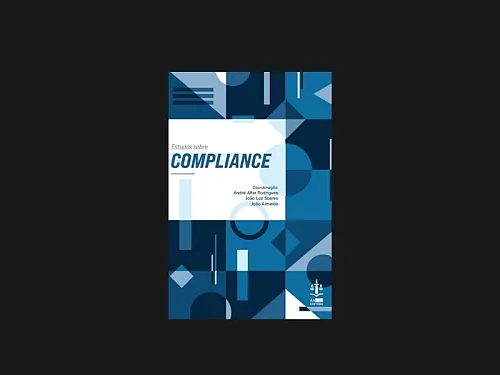
Studies on Compliance
Rui Patrício and Nuno Igreja Matos are the authors of the article “Compliance in the Application of Article 11 of the Portuguese Criminal Code – A Turn of the Screw”, published in the collective work Studies on Compliance, edited by AAFDL Editora.
In their article, the authors examine one of the most complex issues in contemporary criminal law: the criminal liability of legal persons and, in particular, the role that compliance programmes should play in its attribution. Drawing on the historical evolution that led to the acceptance of corporate criminal liability—breaking with the tradition of a criminal law centred on individual responsibility—the text highlights the theoretical and practical tensions that still persist in this field.
The analysis focuses on Article 11(2) of the Portuguese Criminal Code, seeking to clarify whether, and to what extent, the existence of effective compliance systems should influence the criminal liability of legal persons. The authors emphasise that, despite the growing relevance of compliance, there remains significant doctrinal and case law uncertainty regarding its criminal-law value, contributing to unpredictability in the application of the law.
The main points addressed include:
- The structural transformation of criminal law through the introduction of corporate liability;
- The lack of theoretical consolidation accompanying this legislative development;
- The debate on the role of compliance as a factor for excluding or mitigating criminal liability;
- The need to clarify the criteria for attribution set out in Article 11 of the Portuguese Criminal Code.
The article thus offers an in-depth reflection on the relevance of compliance in criminal attribution, aiming to contribute to the conceptual stabilisation of a topic that remains highly demanding for both legal scholarship and judicial practice.
Studies on Compliance brings together contributions from a range of experts, with the aim of providing a critical and multidisciplinary analysis of the current challenges of compliance, in a context where it plays a central role in governance, integrity and organisational sustainability.
Find out more about the publication here.